Blog

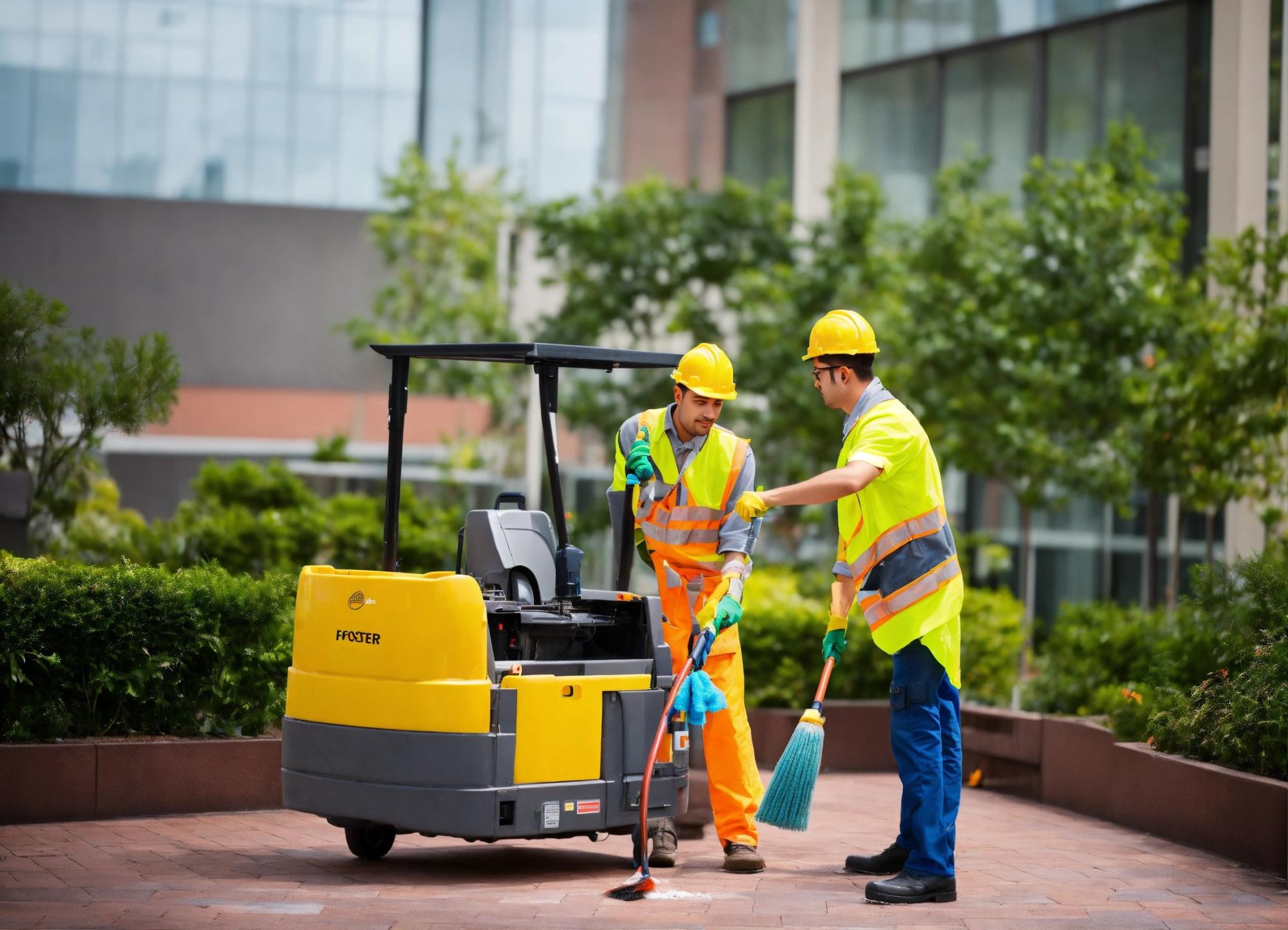
The projected global market for floor scrubbing machines
The global industrial and commercial floor scrubber market was valued at around US $3.1 billion in 2022, seeing quite a surge from 2018–19 due to the increased focus on industrial cleaning during the pandemic. That market is projected to grow at a very healthy and buoyant compound annual growth rate (CAGR) of 8%, from US $3.35 billion in 2023 to US $6.19 billion by 2032.
Walk-behind floor scrubbers took the majority of the market share in 2022, at around 35%, with a value of US $1.7 billion. They hold steady growth due to their convenience of size and mobility, making it easy to move them from floor to floor within a building. However, the increasing interest in intelligent and autonomous floor cleaners is leading to faster projected growth for robot scrubbers, as these are seen as a great option for frequent cleaning demands.

An introduction to floor scrubbing machines
Floor scrubbing machines are floor cleaning machines that include a number of functions. The cleaning process involves removing dust and dirt, washing and scrubbing, vacuuming off the residue, and finishing the cleaned floor.
Floor scrubbers do not remove any layers of floor, as would a floor grinder, nor do they polish or buff the cleaned floor, as would a floor polisher. Floor grinders use an abrasive grinding disk (or disks) to remove the top layer of the floor, and floor polishers use a soft rotating disk to shine up the clean floor. So when looking at floor scrubbing features, it is helpful to know what they can do and what they cannot do.
Floor scrubbing machines are really the modern industrial equivalent of the old brush, mop, and bucket. The rotating brush provides a sweeping function to remove dust and dirt. Then clean water and a detergent or cleaning agent are dispensed from a fitted clean water reservoir. A rotating or oscillating head brushes the cleaning agent into the floor to remove stains.
The dirty water mix is then vacuumed up into a dirty water reservoir. Lastly, a sponge or squeegee-like fitting wipes up any remaining fluids to leave a fairly dry floor. All this happens in a single pass of the machine, so there is plenty going on in that one movement.
There are a variety of cleaning brush mechanisms available, including a rotating brush, a cylindrical brush, or a square oscillating style brush. As scrubbers are usually circular, they cannot get into room corners, but there are square-design versions of oscillating brush mechanisms that can work into corners well. Cylindrical brushes are able to collect objects from the floor, such as screws and other debris, and sweep them into a tray behind the cylinder.
Small scrubbing machines have a small cleaning area and are pushed along by the operator. Larger machines may have space for the operator to stand on, or they may be ride-on machines with a driver’s seat. There are remote control versions and fully automated “intelligent” robot-type machines.
So, with this range of features and capabilities, there are a few key designs, applications, and functions to consider in making a choice of which machine to buy.